

MAVKA
Ballet in 2 acts
Music by Viktoriia Poliova
Libretto by Vasyl Vovkun
Directors
Chief choreographer
Chief conductor
Assistant choreographer
Set and lighting designer
Assistant lighting designer
Costume designer
Assistant costume designer
Officials and performers
Mavka
Anastasia Bondar
Jaryna Kotys
Honored artist of UkraineOlga Pylypeiko
Olesya Marchuk
Lukash
Arsen Marusenko
Oleksandr Omelchenko
Honored Artist of UkraineForest Spirit
Dmytro Kolomiets
Оleksandr Zamlynnyi
Artur Kokoev
Water Sprite
Daryna Kirik
Mariana Gress
Olesya Marchuk
Fiery Serpent
Dmytro Kolomiets
Ilya Ustynenkov
Koost, the demon
Artur Kokoev
Ruslan Dynia
Kylyna
Anastasia Gnatyshyn
Romana Dumanska
diploma of the international competitionDaria Berkova
Event Libretto
ACT 1
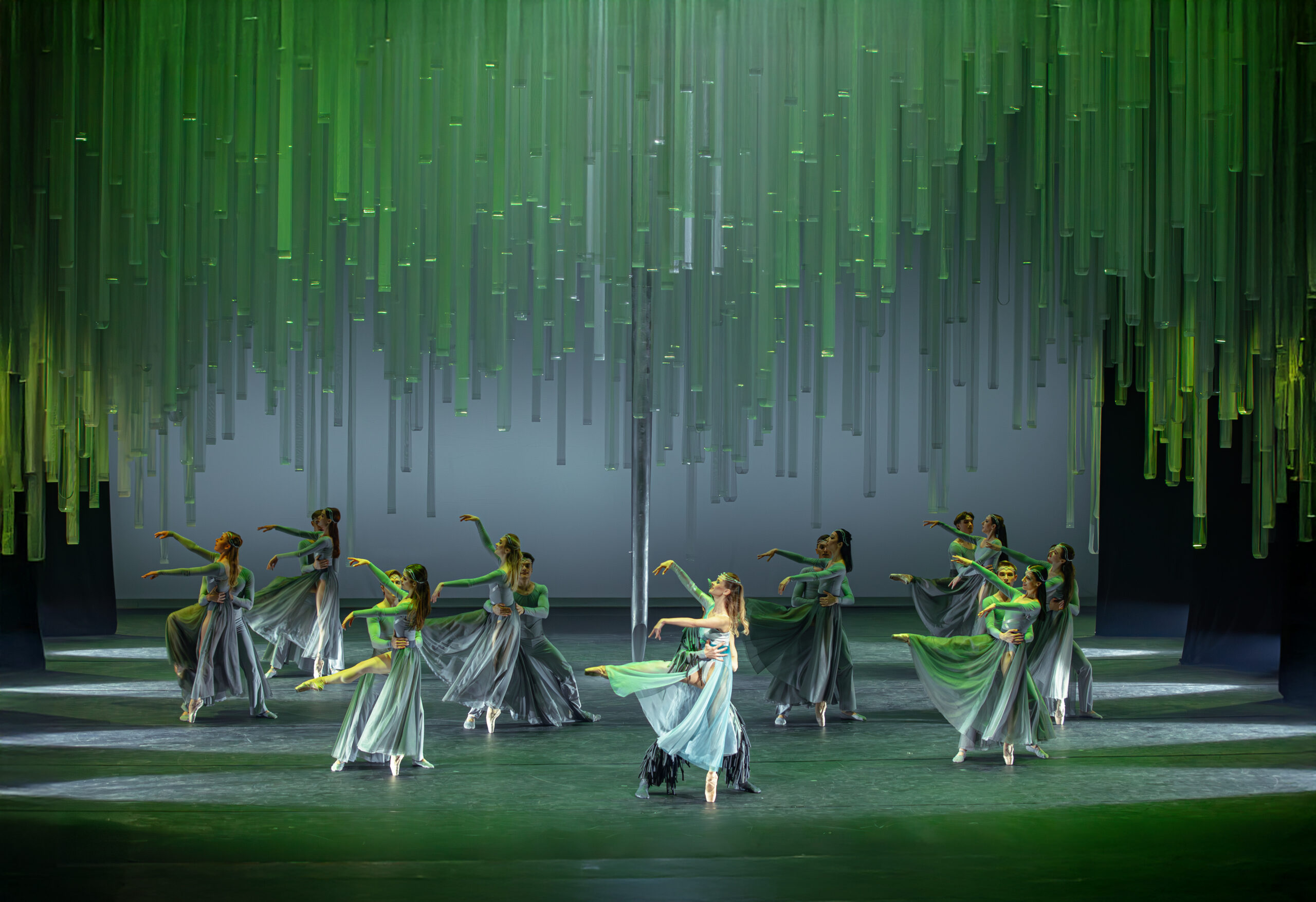
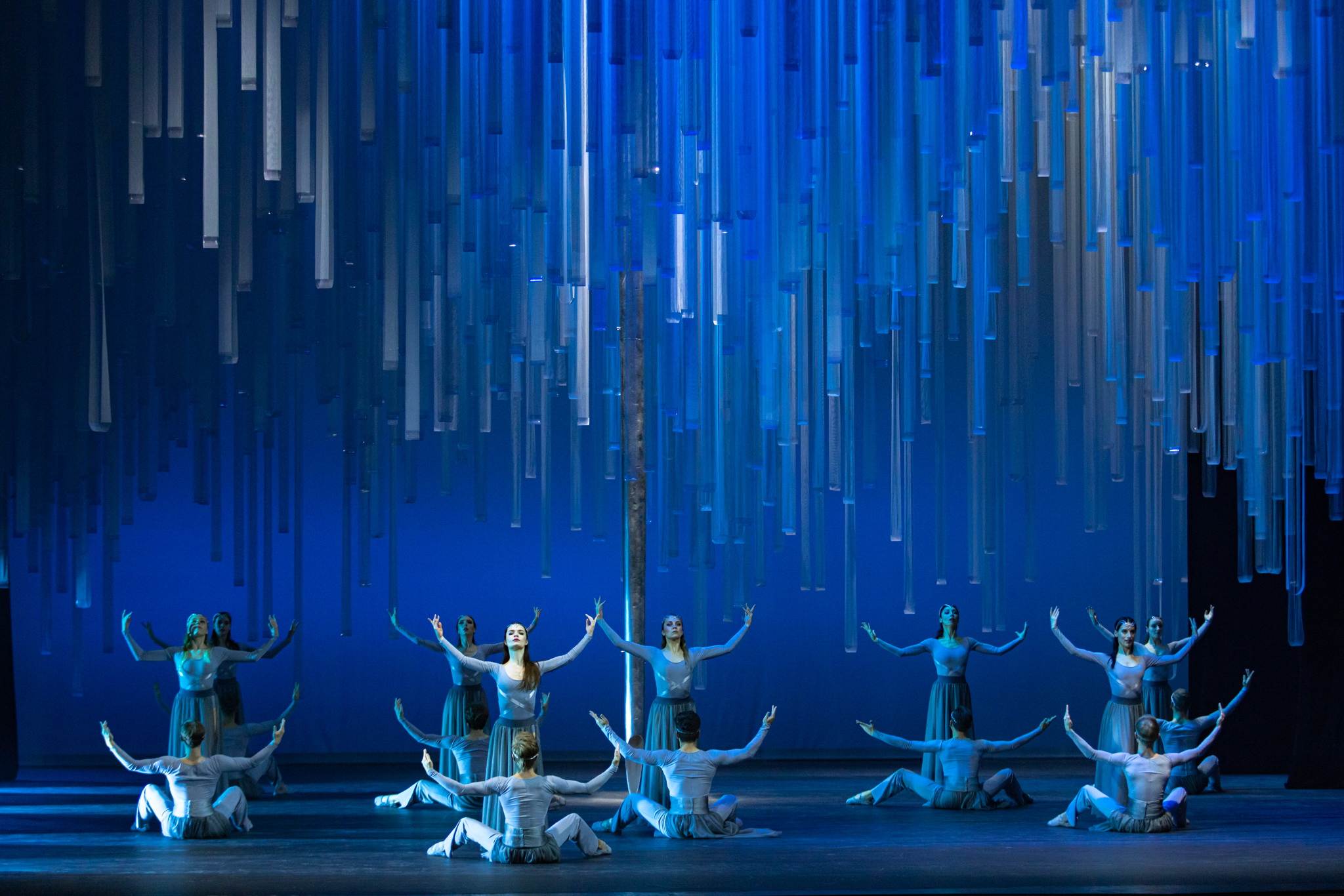
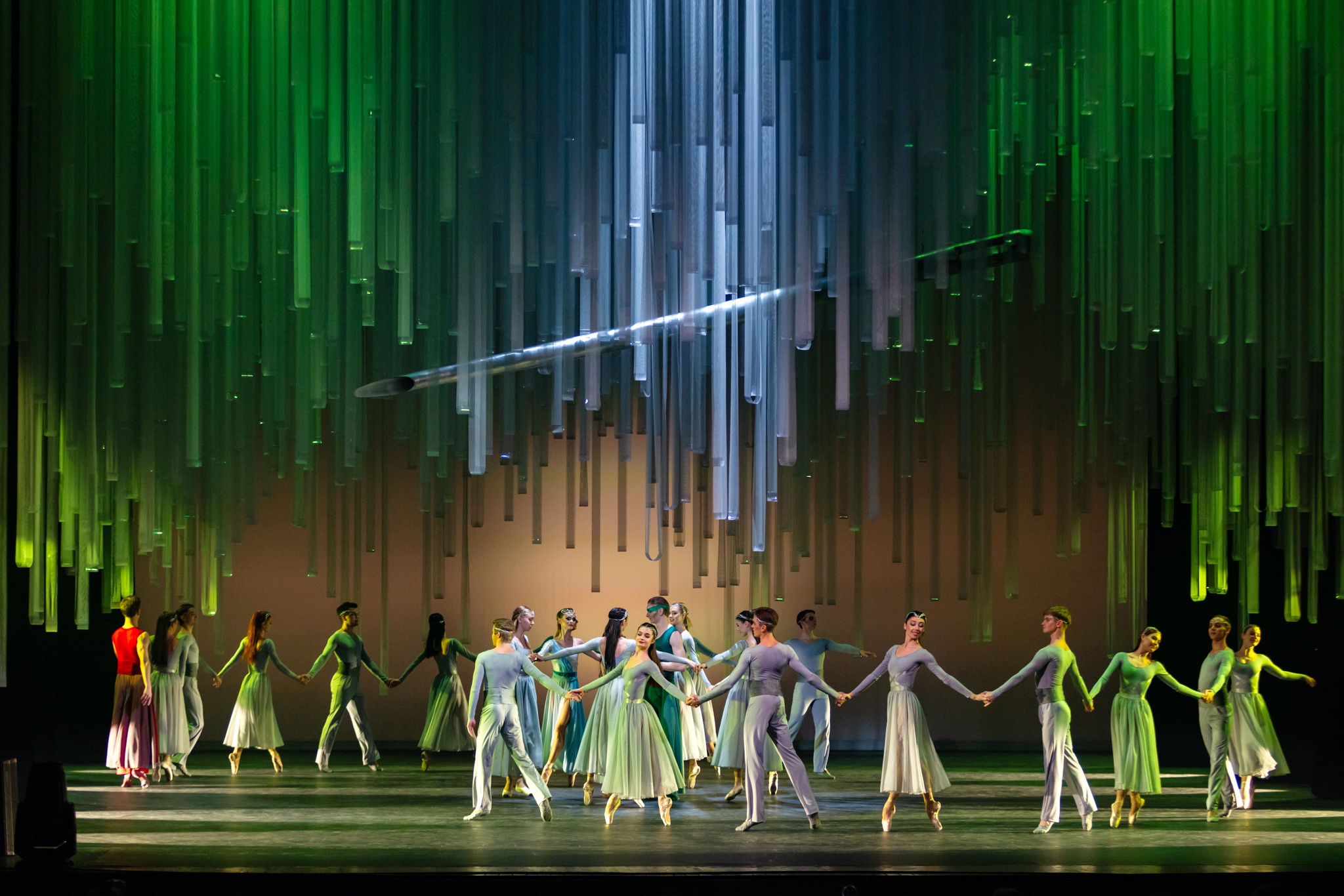
Spring. The forest slowly awakens, filled with movement and the soft rustle of new life. Mavkas, Water Sprites, Water Spirit, Koots, birds, flowers, and other inhabitants of the magical realm appear. Among them stands the majestic Forest Spirit, the wise guardian of this universe.
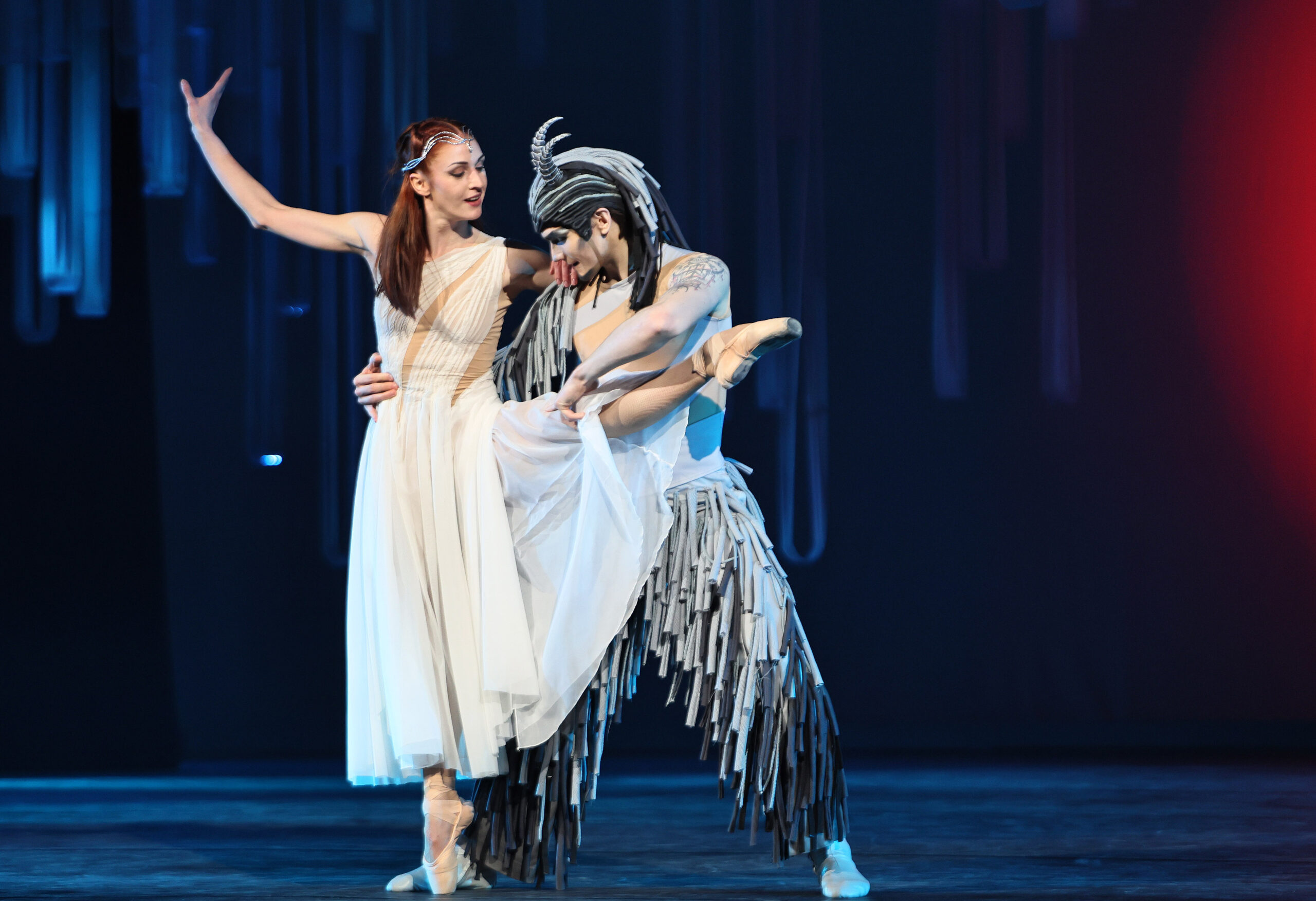
Mavka comes in. Her appearance is like a ray of dawn: light, bright, and gentle. She brings the world to life, and the forest creatures rise in a fluid, harmonious dance. The Forest Spirit dances with her, looking at Mavka with fatherly love.
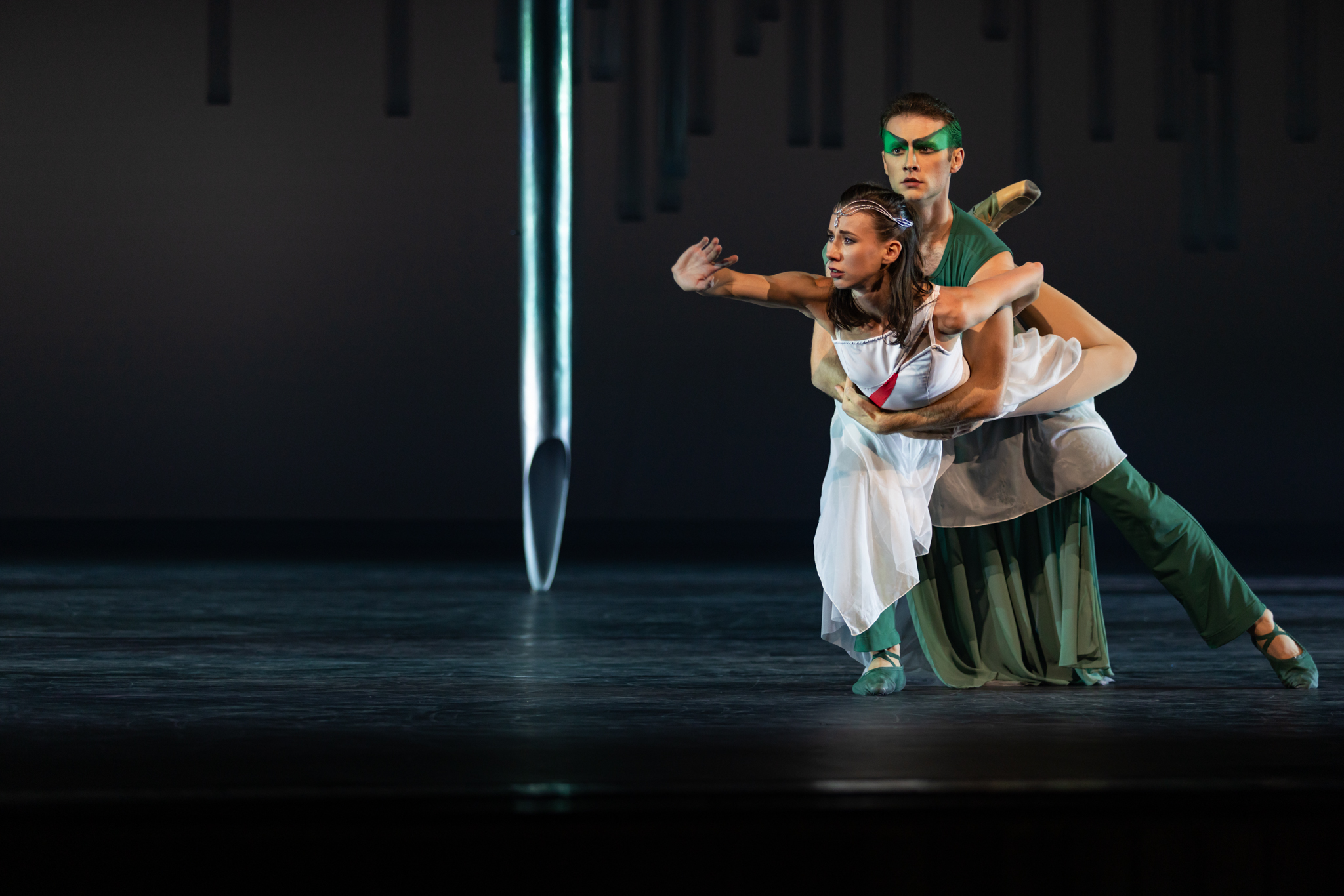
Lukash enters the forest. He seeks to cut a tree to make a flute, but the forest responds in pain. At that moment, Mavka reveals herself to him and stops his hand.
Their eyes meet – and love is born.
Koots tries to court Mavka, but she rejects him. Humiliated, he joins the Water Sprites. Together they devise a cunning plan: to lure Lukash into a trap. When Lukash returns to the forest, he hears voices echoing Mavka’s tone, but they belong to the deceitful Water Sprites. Enchanted, he steps into a marsh and begins to sink.
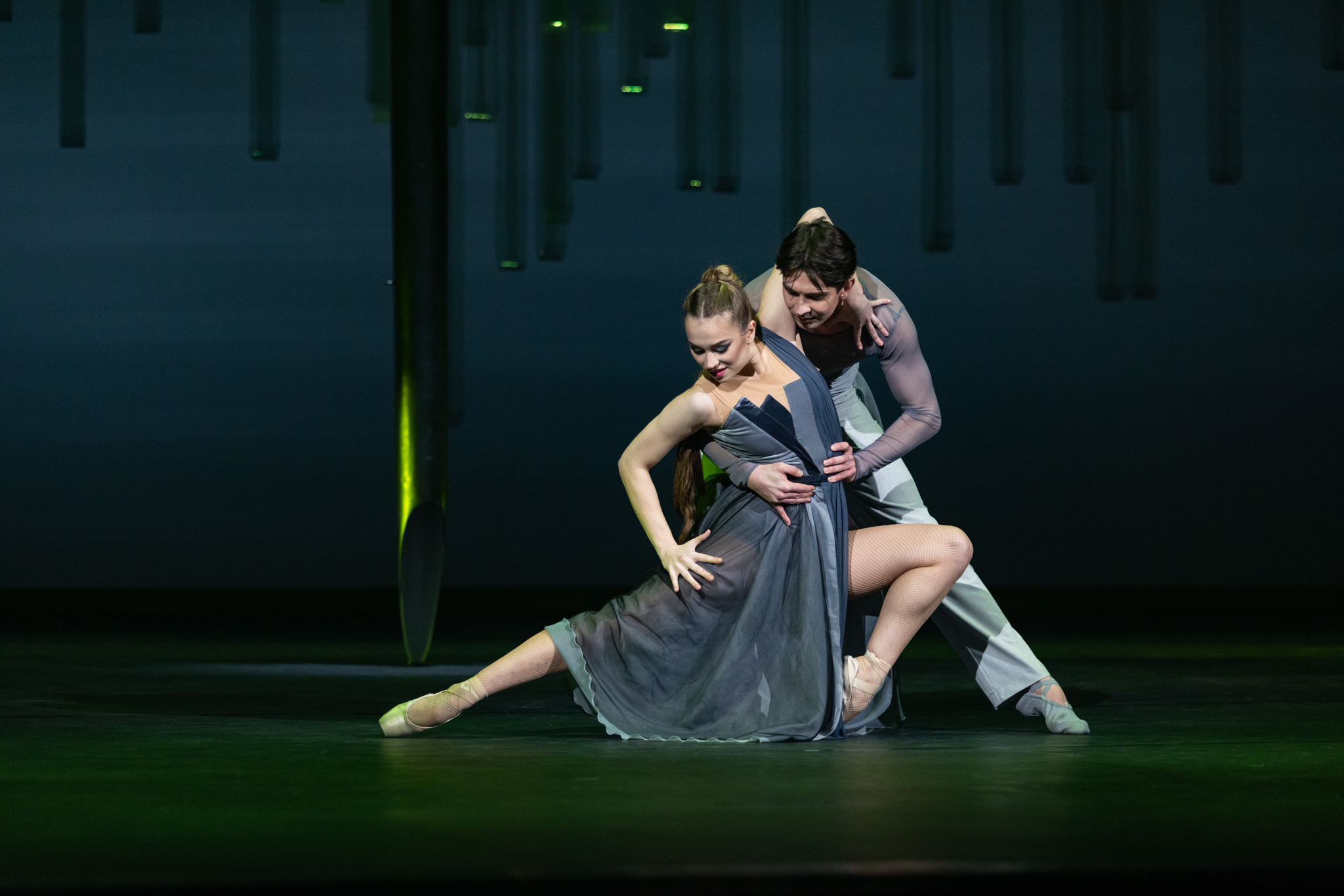
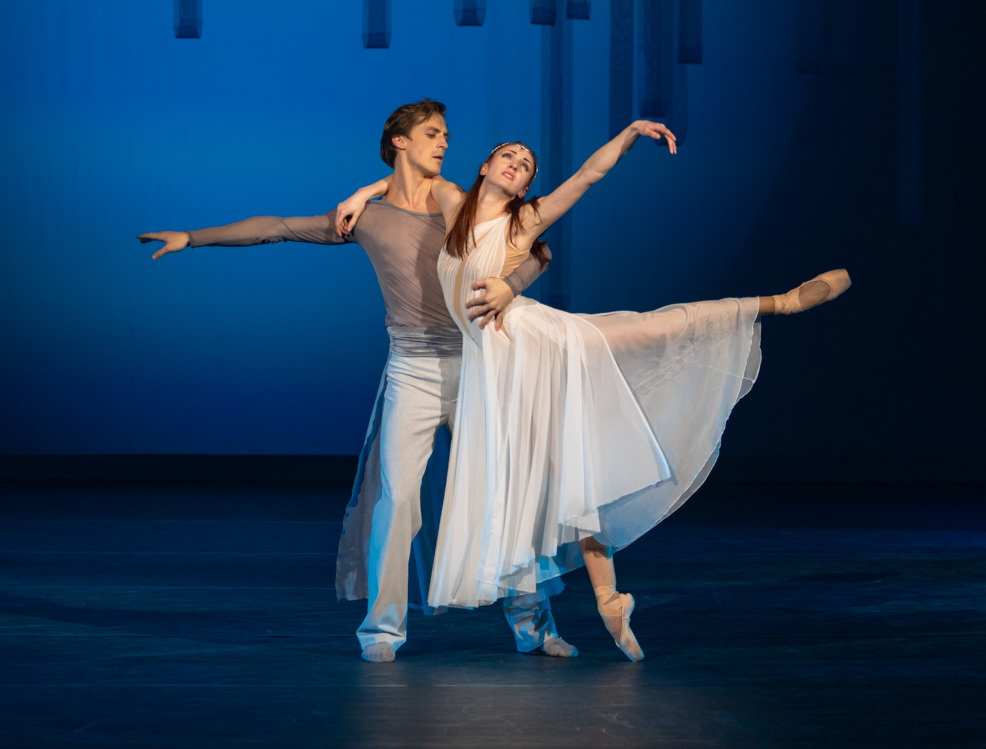
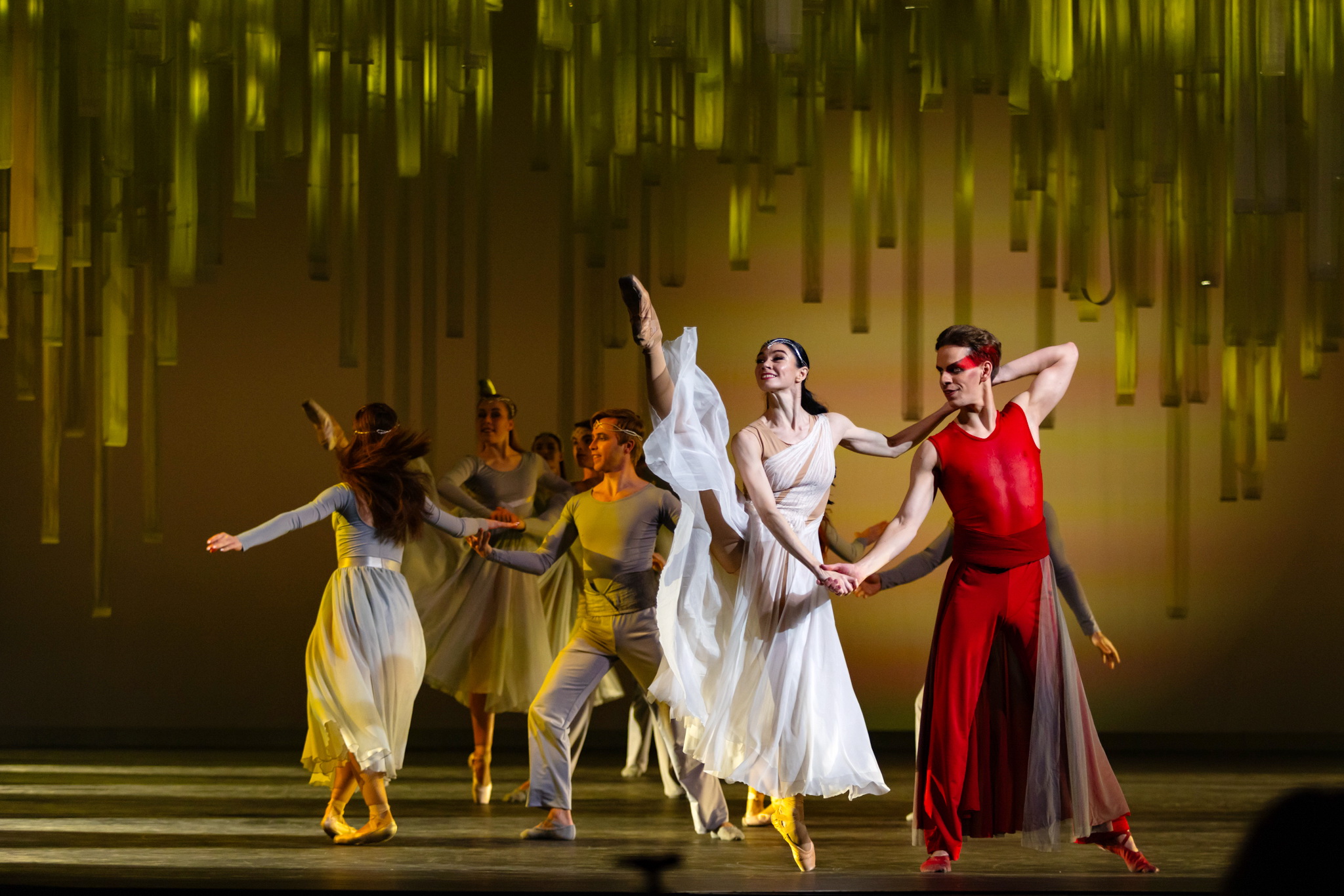
Mavka arrives just in time and saves her beloved. They unite in a passionate dance of love.
Soon, the Fiery Serpent emerges from the darkness of the forest thickets. He tries to tempt Mavka, urging her to return his feelings and fly away with him. But Mavka remains steadfast: her heart belongs to Lukash alone. The Fiery Serpent leaves, filled with longing.
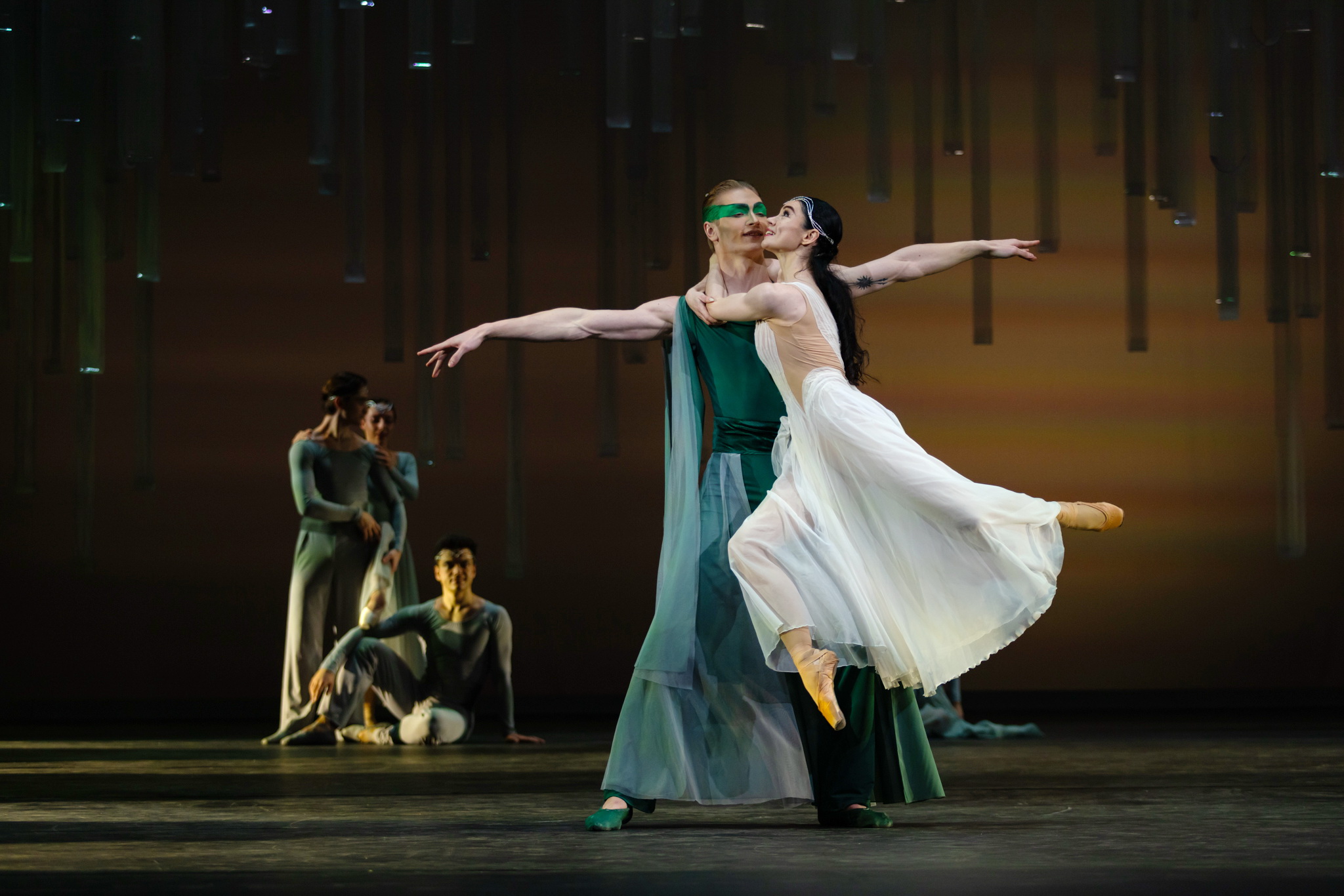
The moment of farewell approaches. The forest dwellers grieve, because Mavka is leaving their world. She tenderly embraces the Forest Spirit, who warns her of the dangers that human life may hold. Yet Mavka still chooses to follow her love – she goes to meet Lukash.
ACT 2
Autumn is coming. The forest slowly sheds its golden beauty, grows quiet, and falls asleep as it prepares for winter’s cold. Mavka appears, tired and confused. She wanders alone among the bare trees, searching for Lukash, but her search is fruitless. The Water Sprites try to entertain her with their playful dancing, yet Mavka’s heart is relentlessly drawn to the one she loves.
Suddenly, the Fiery Serpent bursts out of the thicket, bold and dangerous. Filled with lust and passion, he insists that Lukash is unworthy of her, claiming that only he, the Fiery Serpent, loves her sincerely and devotedly. He paints for her a seductive vision of the future: a life of freedom, flight, and fire. Mavka refuses him, yet a shadow of doubt flickers across her heart.
At that moment, Koots appears, accompanied by his beloved Water Sprite. Their playful lightness, mutual tenderness, and carefree joy stand in stark contrast to Mavka’s growing turmoil.
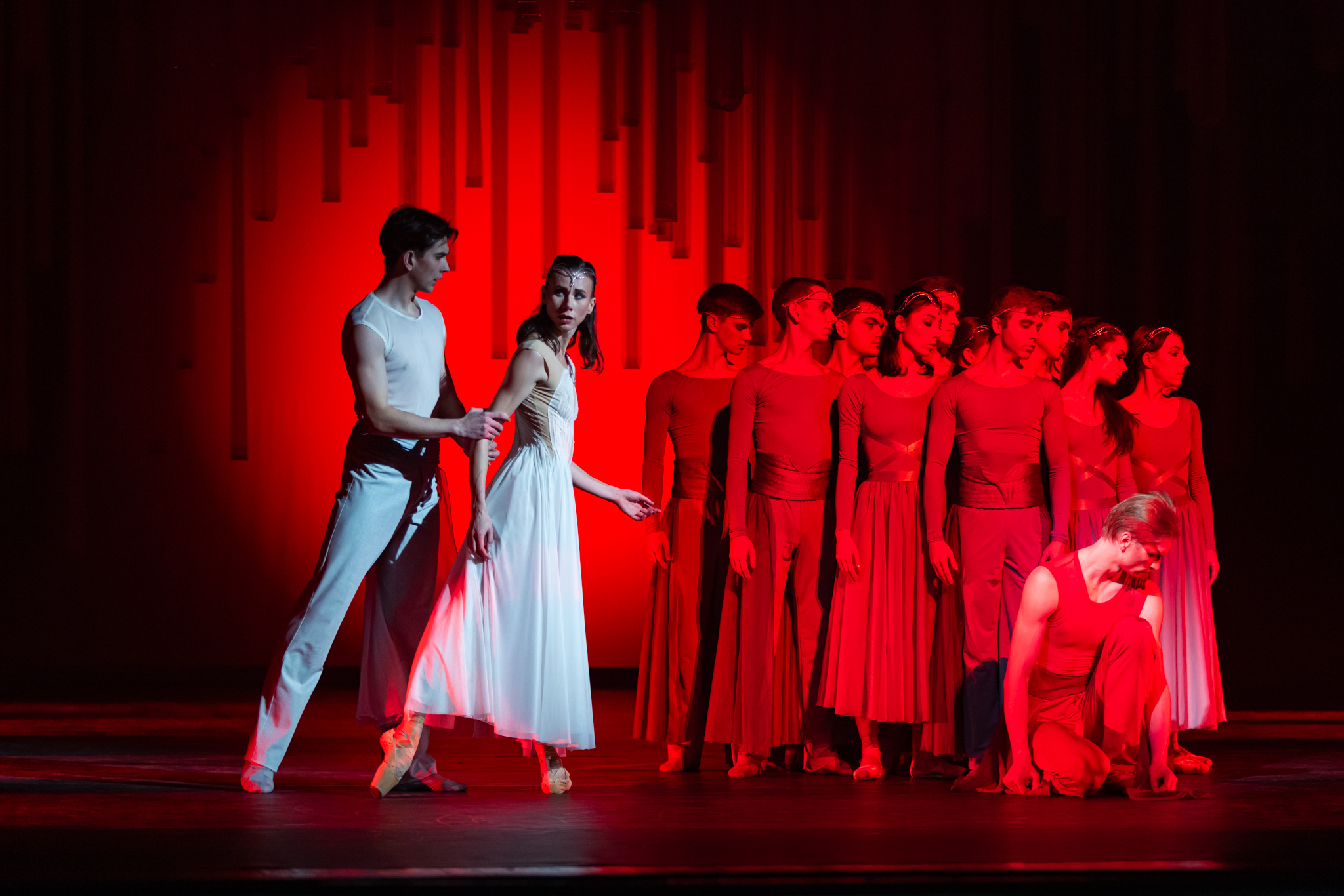
Then the forest creatures suddenly gather, anxious and unsettled; they part, and Lukash steps into the centre. But he is not alone: Kylyna stands beside him. Mavka sees them together and freezes, her soul overwhelmed with anguish and disbelief.
Despite the pain, she approaches Lukash, seeking even a trace of his former tenderness. However, he coldly pushes her away.
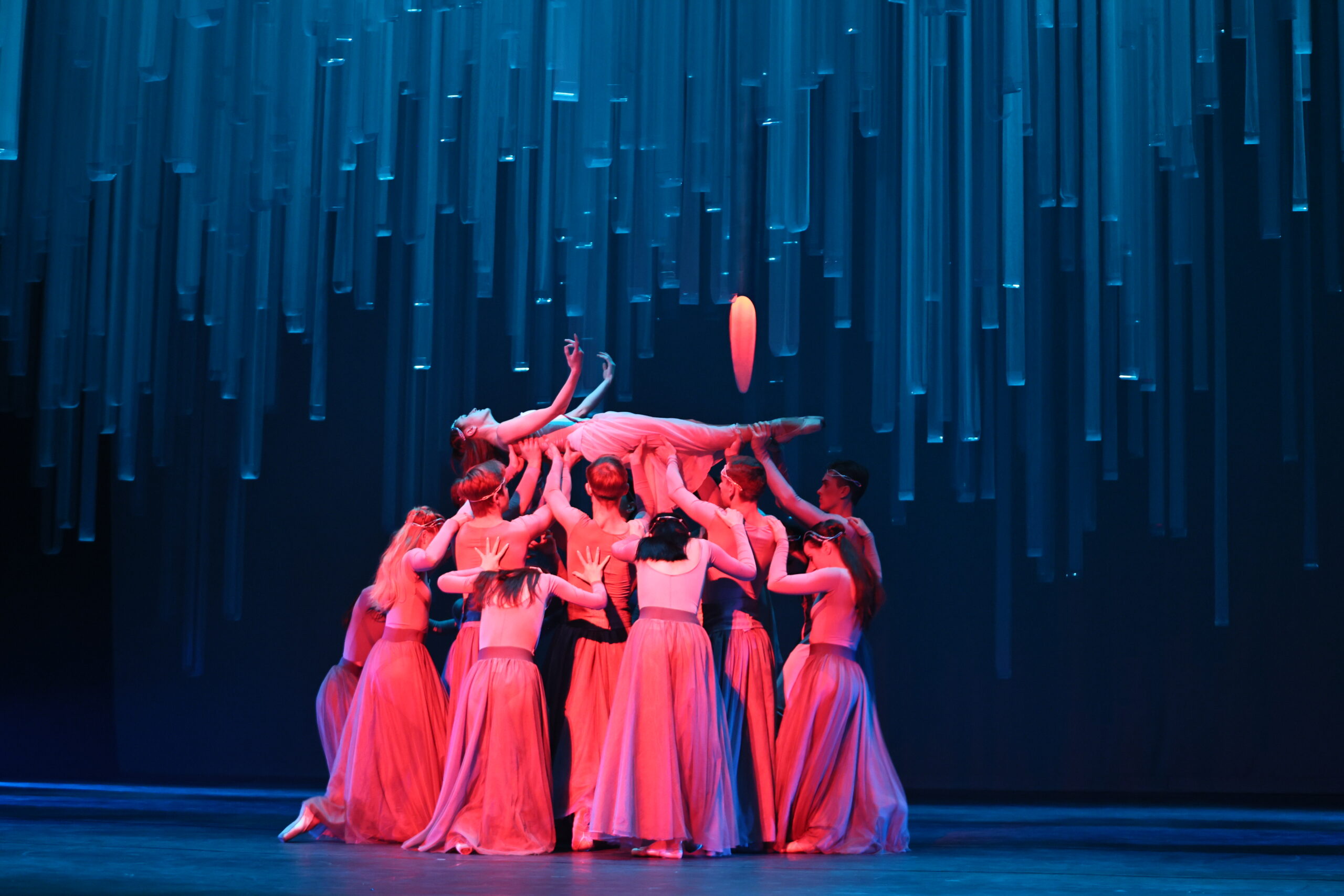
Mavka plunges into a whirlwind of her suffering. Lukash’s betrayal cuts so deeply that it feels as though part of her soul has been torn away. She weakens, fades and finally collapses, powerless.
The Forest Spirit appears. His gaze is full of sorrow and compassion. He tells Mavka that it is time to go to the One Who Dwells in the Rock – to fall asleep until spring, for only then can her pain be healed.
The Forest Spirit punishes Lukash for his betrayal by taking away his sight. Blinded and tormented, Lukash stumbles helplessly, searching for Mavka by touch.
Moved by his suffering, Mavka returns. She forgives him. For a moment, it seems to Lukash that everything might yet be restored… but no – Mavka is leaving forever.
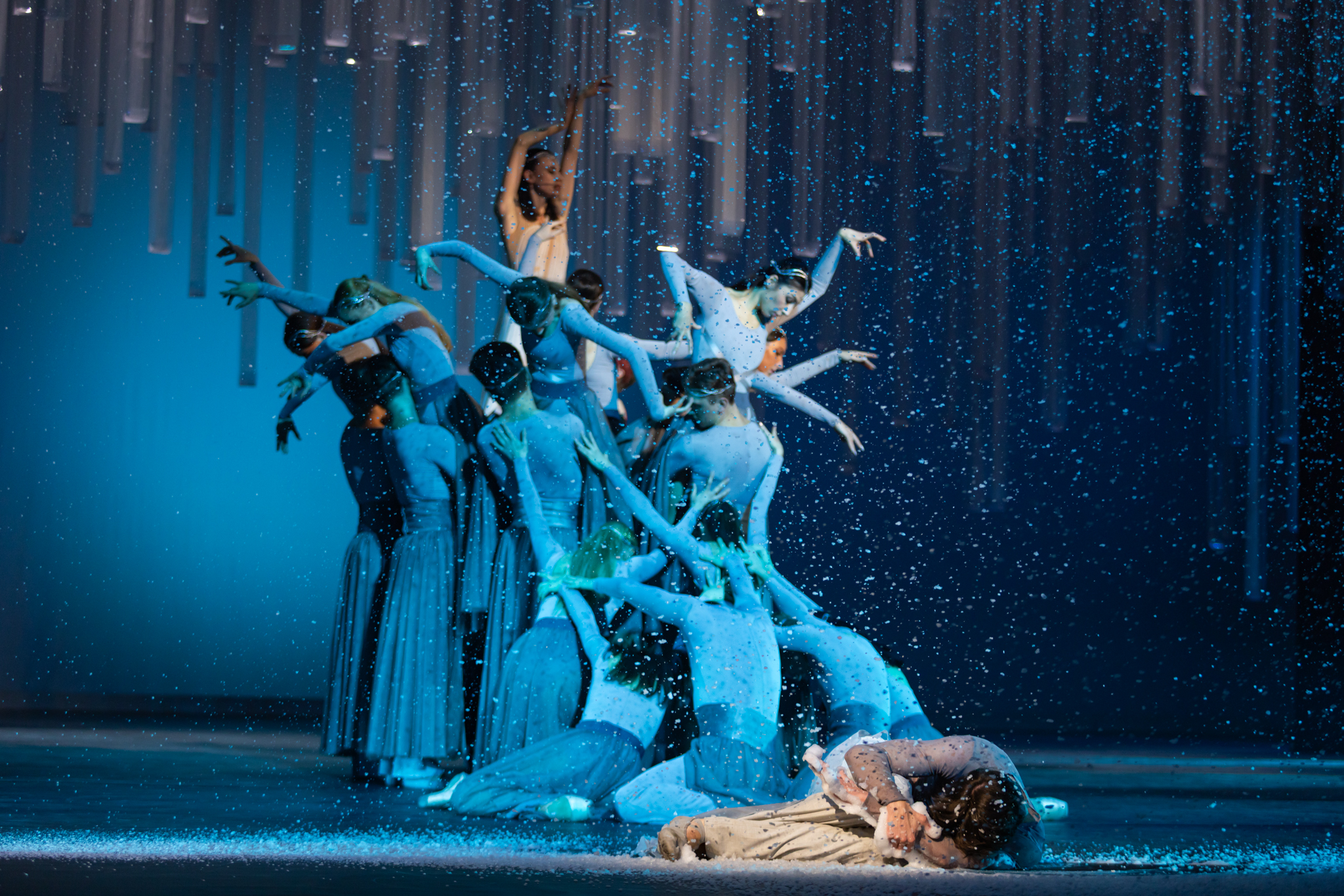
Slowly, she transforms into a tree: a symbol of eternity, of nature enduring beyond human passions and mistakes. The blinded Lukash collapses beneath it. Snow is falling. He leans against the trunk, as if trying to see Mavka with his soul. His body grows cold, freezes, and he dies beside her.
Short Description
Mavka: From Lesya Ukrainka’s Poetic Word to the Grand Stage
For most of us, the name of Lesya Ukrainka is a symbol of Ukrainian culture, familiar since our school years. Yet behind the canonical image of a “strong and sick girl” stands a far more complex and compelling figure: an intellectual of European stature, a translator, publicist, feminist, and thinker who lived in constant motion – between Ukraine, Europe, between myth and modernity.
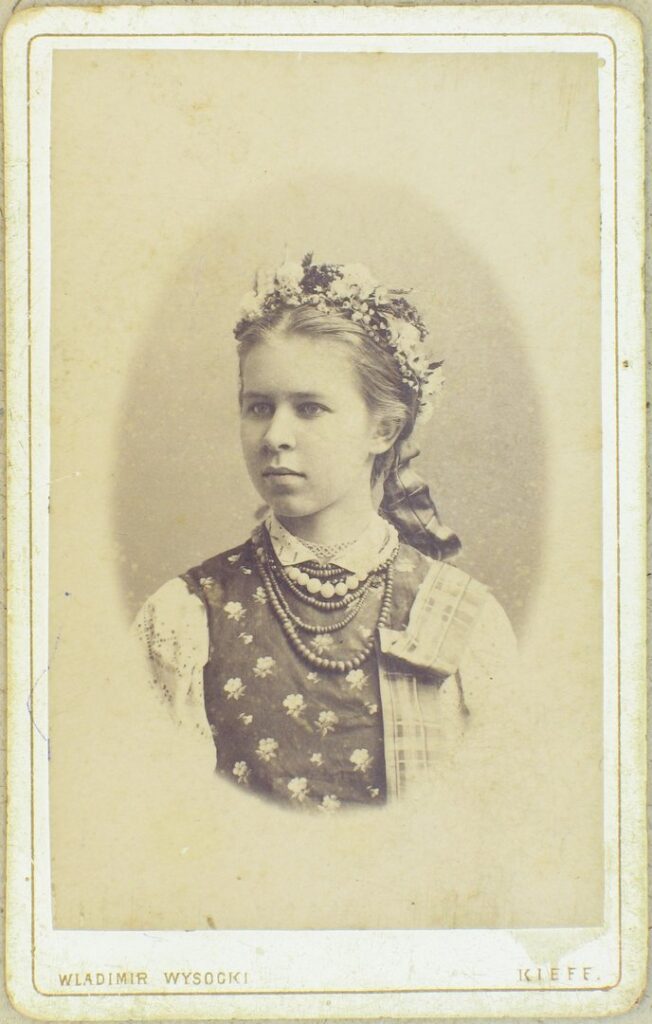
- Larysa Kosach, Kyiv, 1884
- Images from the website ocalhistory.org.ua/texts/statti/taiemnitsia-lesinikh-liubovei/
Larysa Kosach was born into a family where freedom of thought was a legacy. Her mother, Olena Pchilka, was a writer and one of the initiators of the first Ukrainian feminist almanac, “The First Wreath”; her uncle, Mykhailo Drahomanov, was a European-oriented educator and political philosopher. In this circle, where philosophy, antiquity, and politics were everyday topics, a child was raised who learned to read at the age of four and began translating by nine.
Lesya spent her childhood in Volhynia, among forests that would later come to life in “Forest Song”. However, the fairy-tale world of nature was interrupted early by illness. Bone tuberculosis condemned her to what she later called “citizenship in the country of illness.” This, however, did not become a tragedy; it became a challenge. Deprived of formal schooling, she pursued self-education. Rejecting pity, she chose discipline and work. Mastering more than ten languages, she translated Homer, Heine, Mickiewicz, hymns from the “Rig Veda”, and ultimately became a conduit through which modern European drama entered Ukrainian culture.
At the age of twenty, Lesya discovered the work of Olha Kobylianska, and this spiritual kinship gave rise to one of the most significant female dialogues in Ukrainian modernism. Lesya Ukrainka’s heroines, from Mavka to the protagonist of “The Possessed”, are self-sufficient, sensual, and profoundly tragic. As Solomiia Pavlychko noted, these figures “echo the crisis of traditional Ukrainian masculinity”: strong women appear to be too great for their surroundings, too free for a society still unprepared to accept freedom.
“The Forest Song”: A Myth of Love and Freedom
Lesya Ukrainka began writing “Forest Song” in 1911 – almost in one breath. “I wrote it very quickly, in ten to twelve days, and I could not stop, for I was in an invincible state of inspiration,” she confessed in a letter to her sister Olha. After completing the work, she even fell ill – such was the intensity of the creative energy it demanded.
The image of Mavka had lived within her since childhood, born from those nights in the Volhynian forests when she “wandered alone, waiting for Mavka to appear to me.” Over time, however, this fairy-tale figure evolved into a philosophical symbol. No longer merely a water spirit from folk legend, Mavka becomes the embodiment of the human soul, capable of selfless love and driven by an irrepressible longing for freedom.
“Forest Song” is a work in which Ukrainian folklore is transformed into modern drama. Behind the romantic façade lies a reflection on the nature of art, female identity and even corporeality. As contemporary researchers observe, the text contains motifs of “art for art’s sake”, feminist reflection, issues and even eroticism – elements that sounded almost revolutionary in Ukrainian literature at the beginning of the 20th century.
Mavka is not only the personification of nature. She is an artistic soul destroyed by her collision with everyday life. Her tragedy is the tragedy of anyone who dares to live not “as one ought to,” but “as one feels.” That is why “Forest Song” continues to resonate today: in theatrical productions and contemporary reinterpretations, in cinema and animation, in street murals and branded imagery.
The image of Mavka has long transcended the boundaries of literature, becoming a cultural symbol of Ukrainian freedom, beauty, and inner dignity. And Lesya Ukrainka herself is no longer merely a “stone soul,” but a living, emotional, European thinker, modern now as ever.
Musical Interpretations and the Lviv Tradition
The inspiring poetic world of Lesya Ukrainka has long attracted composers – from chamber interpretations to large-scale stage productions. Most of the musical interpretations take the form of solo songs and choral pieces, which sensitively and vividly convey the depth, imagery, and emotional nuance of her texts. At the same time, her dramatic works have inspired numerous compositions for the theatre, including operas, ballets, and dramatic performances with music, many of which have become an integral part of the repertoire of the Lviv National Opera.
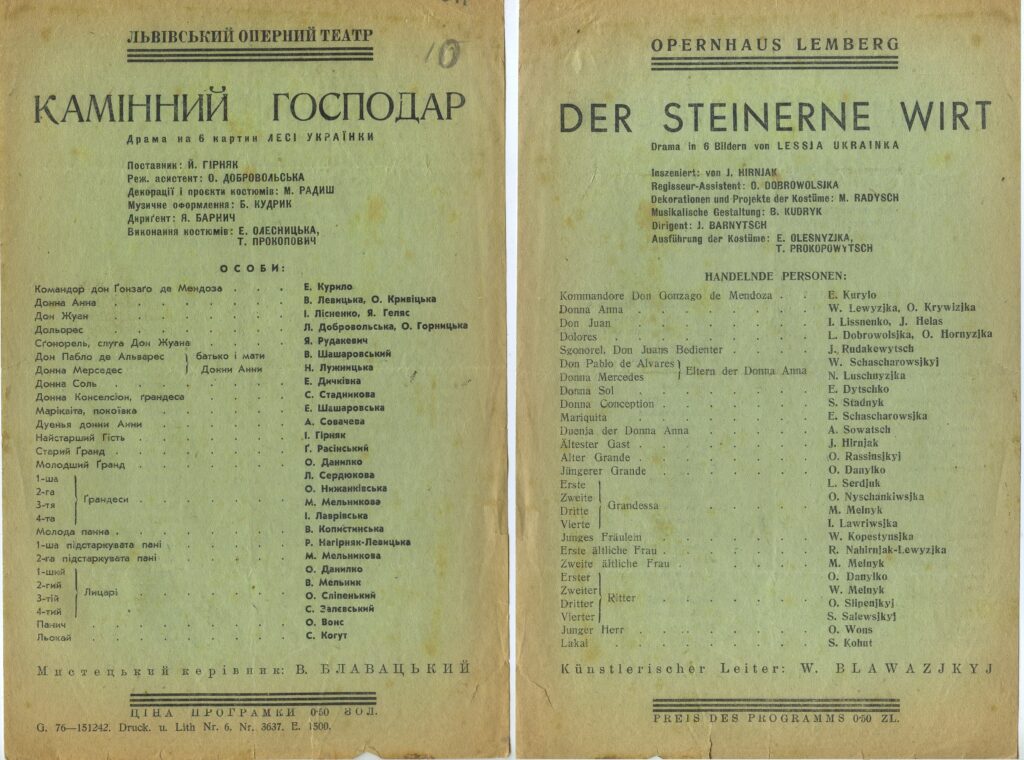
In particular, at the end of 1942, Lesya Ukrainka’s drama “The Stone Host” was staged at the theatre, accompanied by music by Borys Kudryk and directed by Yosyp Hirniak.
The first major original stage work based on “Forest Song” to appear at the Lviv National Opera was the opera of the same name by Vitalii Kyreiko. Its premiere took place on 27 May 1958, conducted by Yaroslav Voshchak, with direction by Borys Tiahno and stage design by Fedir Nirod.
On 19 June 1967, another significant premiere followed: the ballet “Dawn Lights,” inspired by the poetry of Lesya Ukrainka. This work formed part of a ballet triptych alongside Vitalii Kyreiko’s “The Witch,” based on a poem by Taras Shevchenko, and Myroslav Skoryk’s “The Stonemasons,” after a poem by Ivan Franko. The triptych was created by choreographers Anatolii Shekera and Mykhailo Zaslavskyi, with Yurii Lutsiv as conductor.
* M. Skorulskyi. Ballet “Forest Song” staged by the Lviv Opera, 1993
The most famous musical interpretation of “Forest Song” is the ballet by Mykhailo Skorulskyi, a true gem of Ukrainian ballet art. The libretto was written by the composer’s daughter, Nataliia Skorulska, while she was herself a ballet soloist.
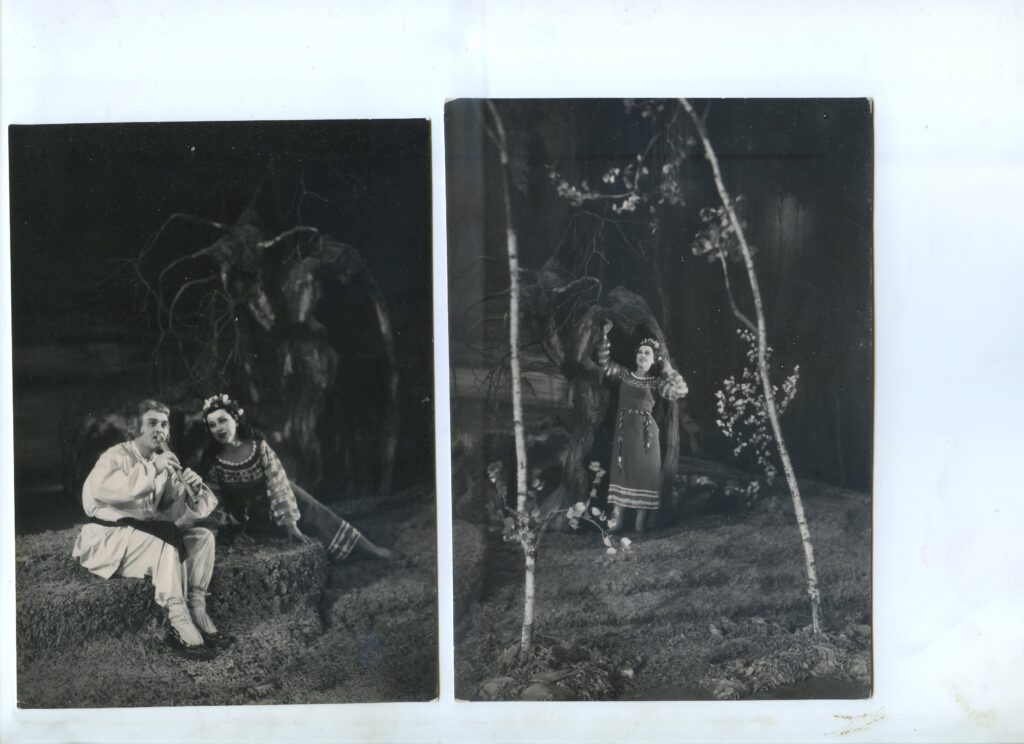
The music was written in 1937, and the ballet was intended for production in the following season. However, its staging was delayed for nearly a decade due to historical upheavals, including the repressions of 1937–1938 against Ukrainian cultural figures and the outbreak of World War II. The ballet premiered in Kyiv, while the Lviv National Opera first staged the work only in 1993. That production was conducted by Mykhailo Dutchak, choreographed by Herman Isupov, and designed by Mykhailo Ryndzak.
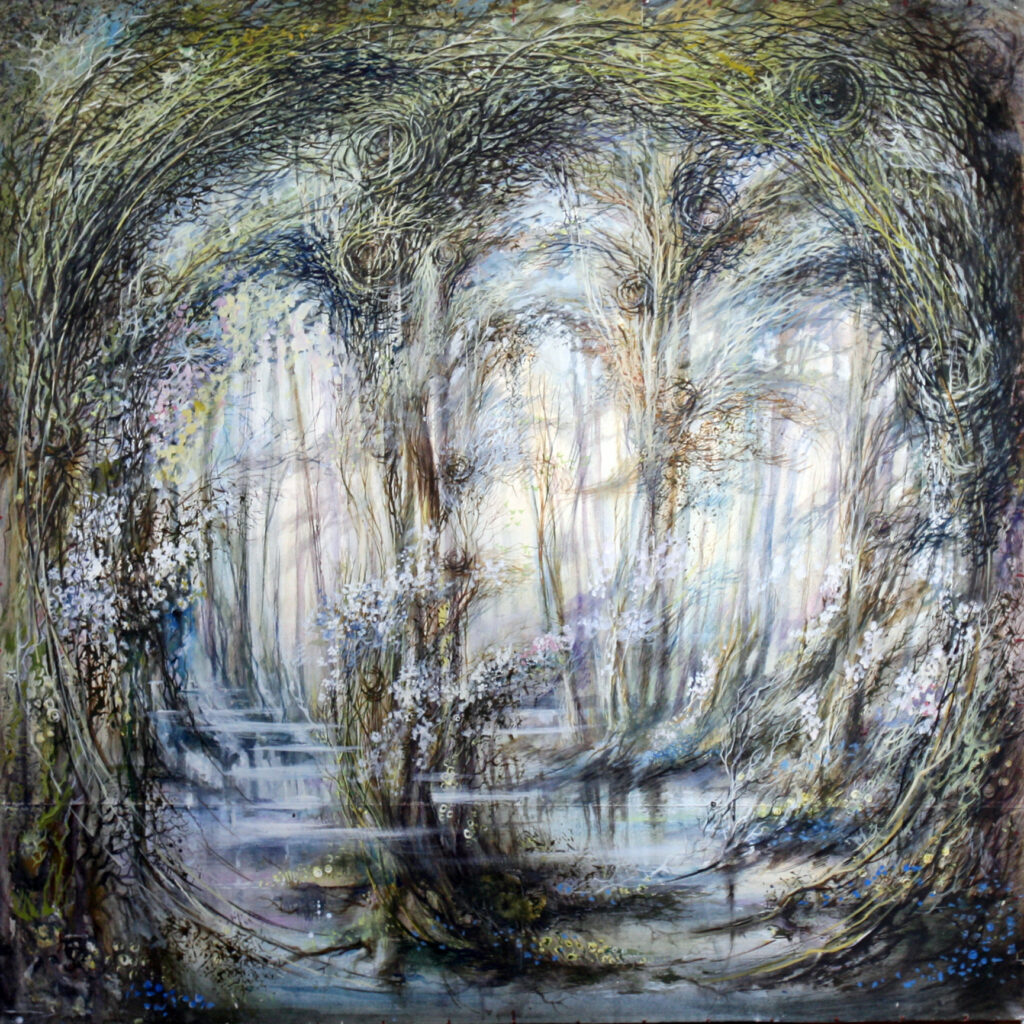
* M. Ryndzak. Sketch of the set design for M. Skorulskyi’s ballet “The Forest Song”
Viktoriia Poliova’s Ballet “Mavka”: a New Interpretation of Drama-Feerie
The Lviv National Opera presents a new production – the ballet-féerie “Mavka” by contemporary Ukrainian composer Viktoriia Poliova, with a libretto by Vasyl Vovkun. This work invites audiences to encounter Lesya Ukrainka’s “Forest Song” through the artistic language of the twenty-first century.
Viktoriia Poliova is one of the leading figures in contemporary Ukrainian music, an author whose work is filled with spiritual reflections, inner light and metaphysical resonance. Poliova’s musical language is marked by transparency, meditative depth, and subtle psychological nuance.
The ballet-féerie “Mavka” is created by an international artistic team – the same group behind the acclaimed ballet “Shadows of Forgotten Ancestors” by Ivan Nebesnyi. The production is staged by chief choreographer Artem Shoshyn (assistant choreographer Tetiana Kuruoğlu), with Yurii Bervetskyi as chief conductor. The visual concept is shaped by set designer Arvydas Buinauskas (Lithuania) and costume designer Nataliia Mishchenko.
The production is not a retelling of the original drama-feerie, but an artistic reinterpretation. It is not merely a story of betrayed love, but a reflection on the fragile boundary between the human and the natural, on spirituality, and on the encounter of two worlds – the fantastic and the real.
Here, Mavka is more than a central character. She is an archetype, a symbol of feminine power, primordial nature, spiritual awakening, and the unity of worlds.
The new ballet by the Lviv National Opera continues the classical tradition while boldly opening new horizons. It is both a tribute to the past and a vision of the future, where Ukrainian mythology, expressed through the language of dance, resonates as something vibrant, modern, and truly grand.
From Lesya Ukrainka to the contemporary stage, “Mavka” returns to remind us that beauty, freedom, and truth are manifestations of our inner resilience.
Nataliia Mendiuk
musicologist